Move From Trauma-Informed Training to Trauma-Integrated Culture
Over 30,000 professionals have completed Ron Huxley’s certification. Now agencies partner with him to implement trauma-informed care at the systems level.
Trauma-Informed Care Course
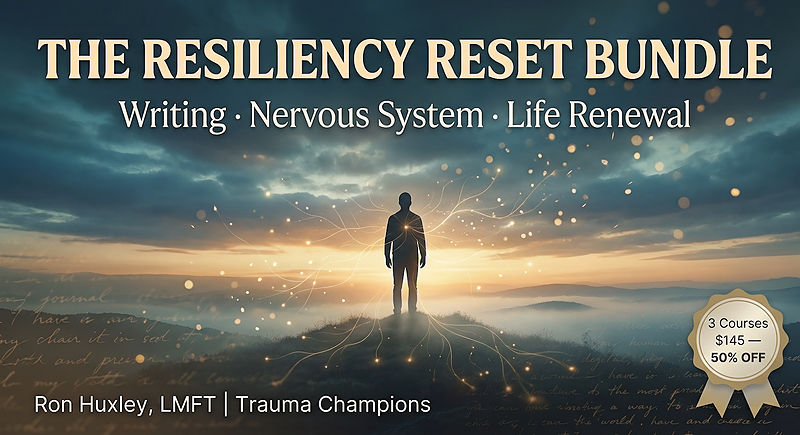
The Resiliency Reset Bundle brings together three powerful courses designed to help you recover from the inside out — through the science of your nervous system, the story you tell yourself, and the life you choose to rebuild.
$145
Trauma-Informed Care Course
Stressed to Secure: Healing for the Home is a three-course trauma-informed parenting bundle designed for families who are tired of just getting through the day. Built on the science of nervous system regulation and emotional safety.
$145
Establish a shared trauma-informed language across your organization. This certification creates a baseline framework teams can build on before implementation begins.
Free
Unlock the potential of your organization with my practical white paper! Discover strategies to create stress-regulating meetings that build trust and enhance performance.
Free
The Trauma Champions Accelerator™ is a structured implementation program designed for organizations ready to move beyond trauma-informed training and into trauma-integrated culture.
$1,500
Learn the exact skills therapists use to help people face their fears and stop the avoidance cycle that keeps you stuck.
$97
Healing PTSD will provide you with strategies, tools, and affirmations today! Let’s growth through the pain and find hope again.
$97
👉 Bring Trauma-Informed Care Training to your organization
Reduce burnout and turnover by giving staff practical regulation tools, shared language, and realistic expectations that make the work feel sustainable again — not endless.
Support staff in high-stress roles with embodied practices teams can use in real time, so stress is processed instead of carried, and people don’t have to recover alone after hard moments.
Improve outcomes without adding more burden by integrating trauma-informed care into existing workflows, conversations, and routines — not by piling on more training, paperwork, or initiatives.
Create consistency across teams through a shared framework that helps staff respond to behavior, crisis, and conflict with alignment instead of fragmentation or reactivity.
Move from good intentions to embodied practice so trauma-informed care shows up in tone, pacing, boundaries, and decisions — not just policies, posters, or trainings people forget.